
Viola
Online viola lessonsNow taking students
One-on-one viola lessons over video, for students 11 and up and adults — including complete beginners, and violinists who want to make the switch.
The viola sits in the middle of everything. It is the voice inside the chord, the part nobody can do without, and there are never enough people playing it. If you have been curious about it, that scarcity is working in your favour.
Tell us about yourself
Tell us a bit about yourself and where you're starting from. We'll be in touch within 24 hours to sort out a free first lesson with Bryan.
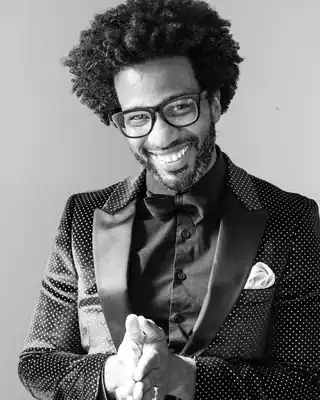
Bryan Brash
Bryan is a Jamaican-born violist whose career runs from the concert hall to the stadium. He started the viola at thirteen in Richmond, Virginia, and moved quickly — winning a place at the Alexander Paley Festival, where he played the Glinka Piano Quartet alongside Mr. Paley himself. He went on to study with Patricia McCarty at the Boston Conservatory on scholarship, working also under Rainer Moog, Bruce Hangen and Judith Eisenberg.
He has spent over twenty years teaching, both privately and in front of orchestras. He was Orchestra and Chamber Music Director at the Boston Arts Academy and later Music Director of the Salina Youth Orchestra, and his work as an educator has been written up in several industry publications.
Alongside that he has had the kind of performing career most players only read about. He has recorded for commercial broadcast, appeared on MTV, and played twice on The Tonight Show Starring Jimmy Fallon. He performed at the 60th Annual Grammy Awards at Madison Square Garden, has shared a stage with Ms. Lauryn Hill & The Fugees and with Ed Sheeran, and most recently played the Super Bowl halftime show with Bad Bunny.
That mix is the useful part. A teacher who has led a youth orchestra knows how to get a beginner from nowhere to playing with other people — and a teacher who has worked at that level knows exactly what the music asks of you when it counts.
What lessons cost
Same rates as the rest of the studio. You and Bryan will settle on the right length together, and it can change as you go.
30 Minutes
$45 / lesson
45 Minutes
$65 / lesson
60 Minutes
$85 / lesson
The first lesson is free, with no obligation either way. Payment works the same as it does for every other instrument here — see the studio policies.
Switching to viola
If you already play the violin, you are most of the way there.
The bow arm transfers almost entirely. What changes is the clef — viola reads alto, which is genuinely new — along with a slightly wider stretch in the left hand and a heavier, slower string that asks you to pull sound rather than skate over it. Most violinists find it takes weeks rather than years.
Worth knowing if your student plays in a youth orchestra: violists are chronically in short supply, and a decent violist usually finds a seat faster than a good violinist does. It is the rare case where the less crowded choice is also the more useful one.
Viola lessons for adults
You do not need to have played the violin, or anything else. Plenty of adults start here.
Viola is an unusually sensible first instrument for an adult, for a reason that has nothing to do with difficulty: it sits lower. The violin’s E string is where beginners make the thin, scraping sound that puts so many adults off in the first month. The viola has no E string. Its lowest string is a C, a fifth below anything on a violin, and the whole instrument speaks in a register much closer to a human voice — which means your early playing sounds tolerable to you sooner. That matters more than it should, because the people who quit mostly quit over the sound they are making, not the difficulty.
The second reason is purely practical. Violists are genuinely scarce, at every level. Community and amateur orchestras are nearly always short of them, and they will take a competent adult violist long before they take an equally competent violinist, because there are forty of those waiting. If part of what you want from an instrument is to eventually play with other people, viola is the shortest honest route to a chair.
What is actually new, if you have played violin before, is the alto clef. It is a real piece of learning rather than a trick, and it takes most adults a few weeks to stop translating and start reading. If you have never read music at all, this is simply the clef you learn, and no harder than any other.
One thing worth knowing before you rent: adult viola sizing is driven by your arm length, not your height. Adult instruments run from about 15 to 16.5 inches, and a great many adults are more comfortable and play better on a 15.5″ than on the 16″ they assumed they needed. A viola that is slightly too large is a long-term injury risk, not just a nuisance. Bryan will size you in the first lesson, which is free — do that before you spend anything.
Getting set up
A viola, somewhere to stand or sit, and a device with a camera.
Don't buy an instrument before the first lesson. Viola sizing is measured in inches rather than fractions and depends on your arm length, not your age, so a viola bought online without advice is very often the wrong size. Renting is usually the sensible first move, and most shops will put the rental toward a purchase later. Talk to Bryan first, then buy.