
Piano
Online piano lessonsNew — now taking students
One-on-one piano lessons over video, for students 11 and up and adults — including complete beginners, and anyone coming back to it after years away.
Piano is the newest instrument at the studio, and the one most people have some history with. A year of lessons as a child, a keyboard in the spare room, a piece you once half-learned. It tends to come back faster than people expect.
Tell us about yourself
Tell us a bit about yourself and where you're starting from. We'll be in touch within 24 hours to sort out a free first lesson with Julie.
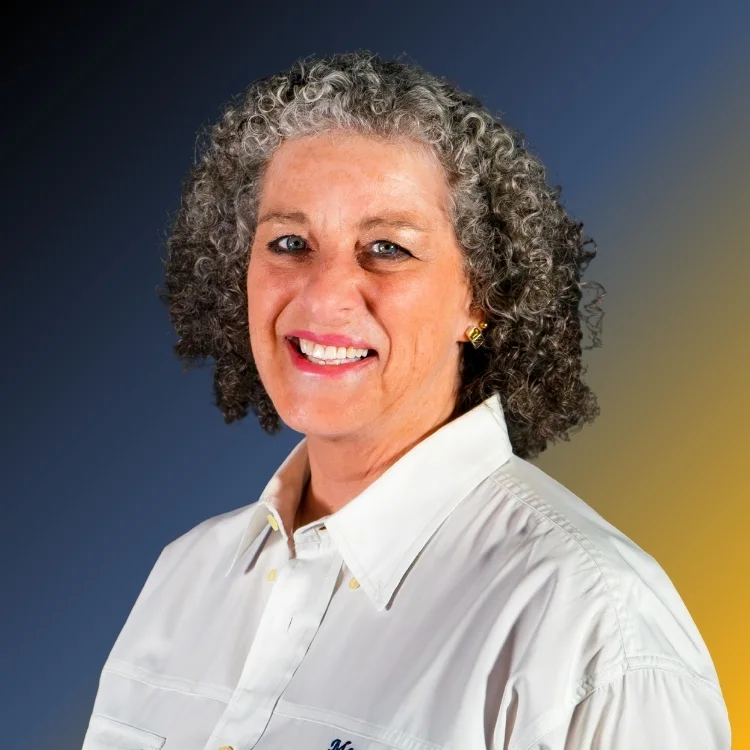
Julie Lopez
Julie teaches piano online from her home studio in Nashville, Tennessee, on a Yamaha upright. She has been teaching for over forty years and teaching online since 2011, so the format is not something she is adapting to — it is most of her career. Her students run from young beginners to players in their nineties, and most of them stay with her for years rather than months, which is usually the most telling thing you can know about a teacher.
She holds a Bachelor of Music Education from the University of Florida, awarded with honors, along with certification in Music K–12 and Elementary Education K–6. She has taught in public schools, tutorials and homeschool settings as well as privately, and is an official Steinway & Sons Teacher and Education Partner.
Her approach starts with listening. In her own words: “Every student is different. I listen to my students before instructing, so I give relevant feedback. Instead of telling my students the correct answer, I ask them questions to help them discover their mistake and correct it.”
That is harder than it sounds and it matters more than almost anything else. A student who is told what was wrong learns that bar. A student who is asked the right question learns how to find the next one on their own — which is the whole point, since the vast majority of playing happens when the teacher is not in the room.
She works the same way on repertoire: she asks what you want to play, then helps you set goals around it and choose the music that gets you there. If you arrive with a specific piece in mind, that is a useful starting point rather than an inconvenience.
Theory is part of every lesson rather than a separate subject, and her students keep a personal music binder — scales, chords, key signatures, fingerings — that builds up into their own reference over time. She teaches mainly from the Piano Adventures books, which keep the cost of materials low and have good recordings and play-along resources behind them.
What lessons cost
Same rates as the rest of the studio. You and Julie will settle on the right length together, and it can change as you go.
30 Minutes
$45 / lesson
45 Minutes
$65 / lesson
60 Minutes
$85 / lesson
The first lesson is free, with no obligation either way. Payment works the same as it does for every other instrument here — see the studio policies.
Getting set up
An instrument, a device with a camera, and somewhere to put it.
An acoustic piano is lovely and entirely optional. A digital piano works perfectly well for lessons, and for a beginner the two things that actually matter are 88 full-size keys and weighted action — keys with some resistance, so the hand builds real strength. A small unweighted keyboard will teach the notes but not the touch, and the touch is most of the instrument.
For the camera, side-on at keyboard height is far more useful than straight down the front — Julie needs to see your hands and wrists, not your face. She will help you set the angle in the first lesson, so don't worry about getting it right beforehand.